I must be driving a lot more than I used to since moving here because I’m noticing I write about what I see from the car more than anything else.
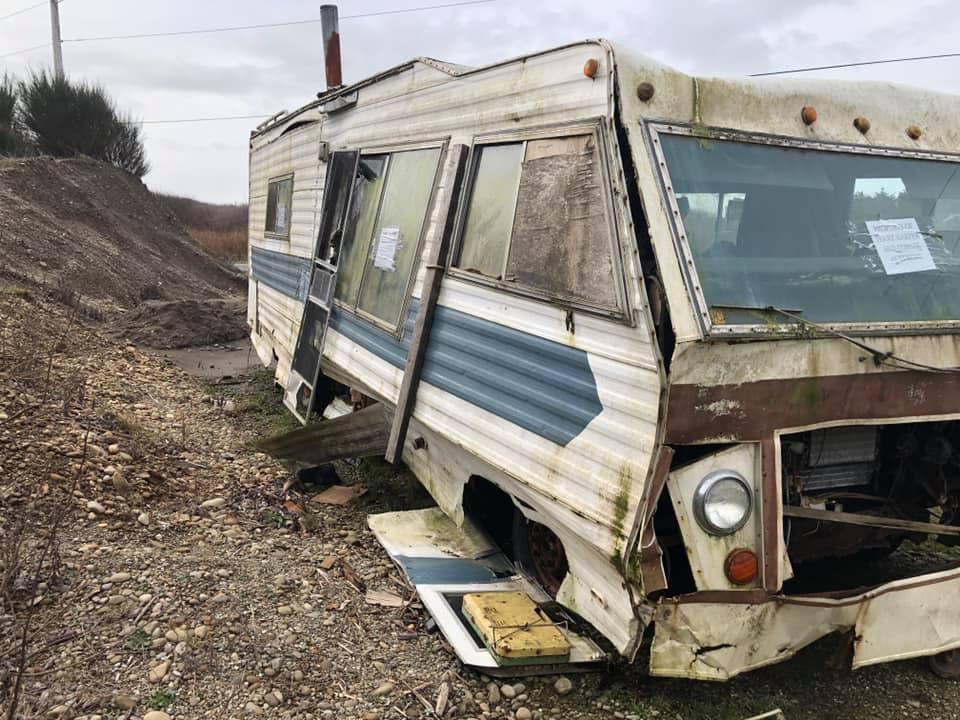
Today’s topic is discarded RVs and motor homes. Dumped alongside the road or someplace where they often sit and fester and decay and decompose. If we’re lucky. They can sit there an awful long time before decomposition happens, creating an ugly eyesore. I call them Roadside Detractions. They’re also distractions. But certainly not roadside attractions.
The first one I noticed was one dropped along the wide place on Ocean Beach Road where there is a big stump lying on its side and a badly damaged vehicle door that I decided must have been left there as a “this is what happens when you drive too fast” warning. For a while, it appeared it was being harvested for parts or contents. Then it up and disappeared. No idea where it went, but not sad to see it go…
Later on, another one appeared just off the road at Milepost 3 in what looks like a private driveway that heads up a hill. We got to watch the entire process at this one… it’s been one of my major things to track during the pandemic, being mostly confined to the house and having watched everything on Netflix and read all my books.
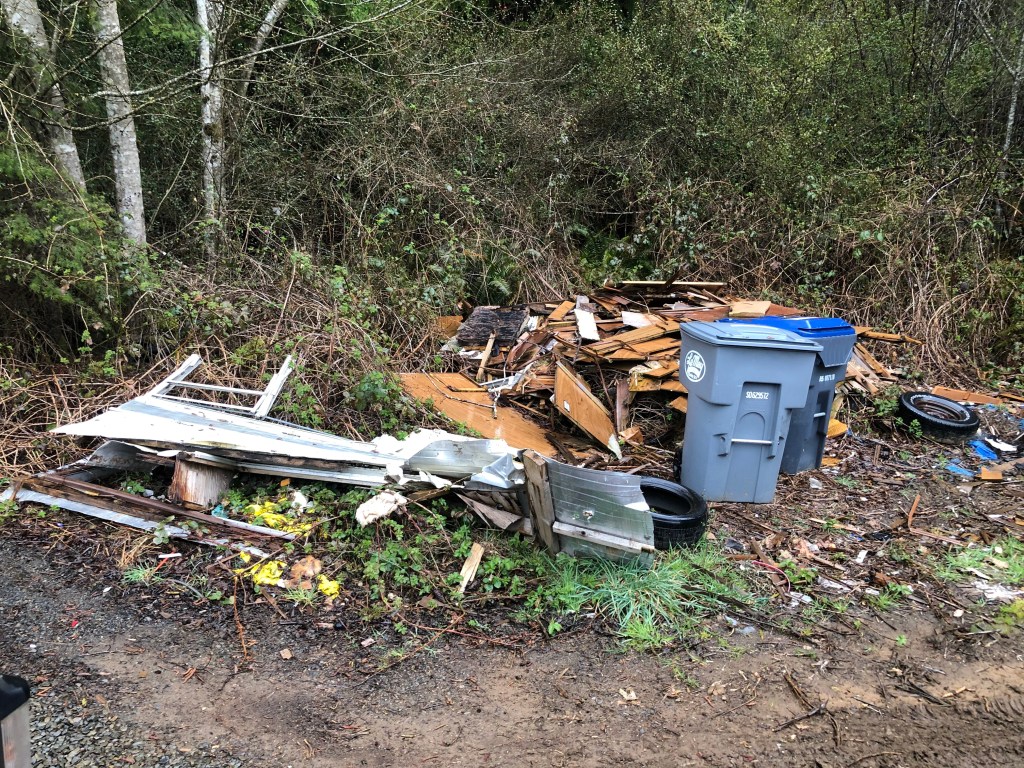
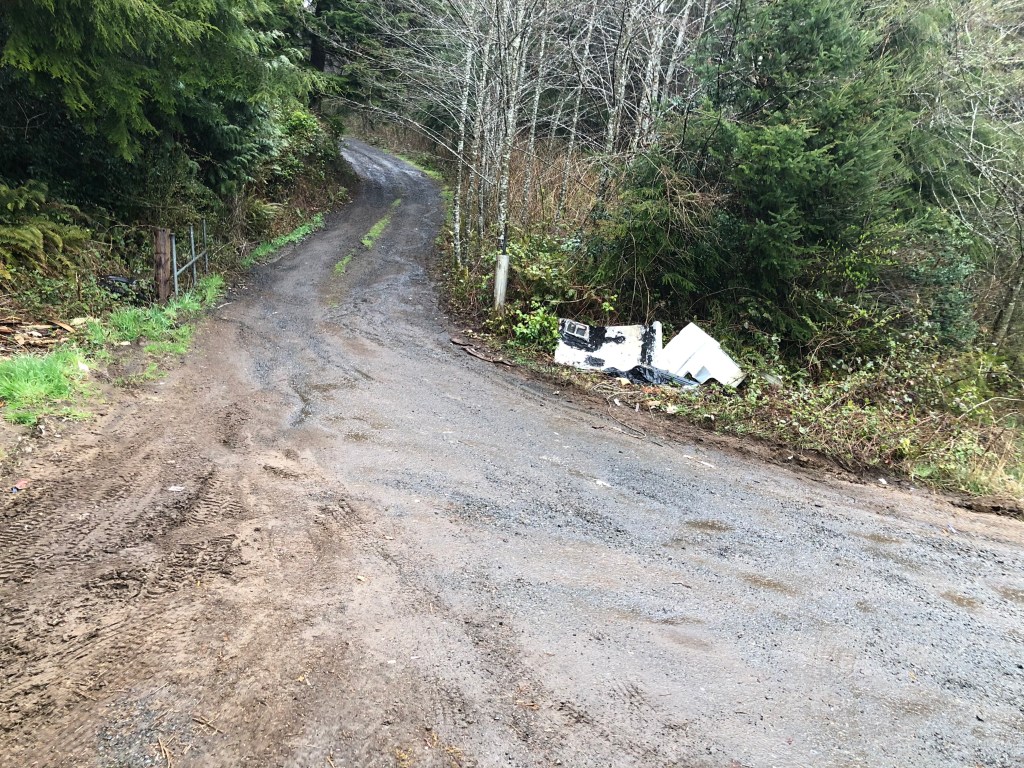
It’s mostly gone now, but some debris still lies about. A couple of LeMay garbage cans showed up a while back. I figure maybe it’s intended to prompt passersby to fill them each week until the mess is all gone, but I could be wrong about that and it doesn’t seem to be working that well? I tried that approach once removing old asphalt siding from my house to fill out the weekly garbage can but when I finally calculated it would take 1,376 years to complete the task and I didn’t even have a ladder, I hired a guy.
Then one got left on Highway 109 near the Moclips Store, and became a topic of discussion on the Friends of Moclips facebook group. It seemed like it was hard to figure out what could be done to rid the community of the eyesore. So I decided to try to get some answers.
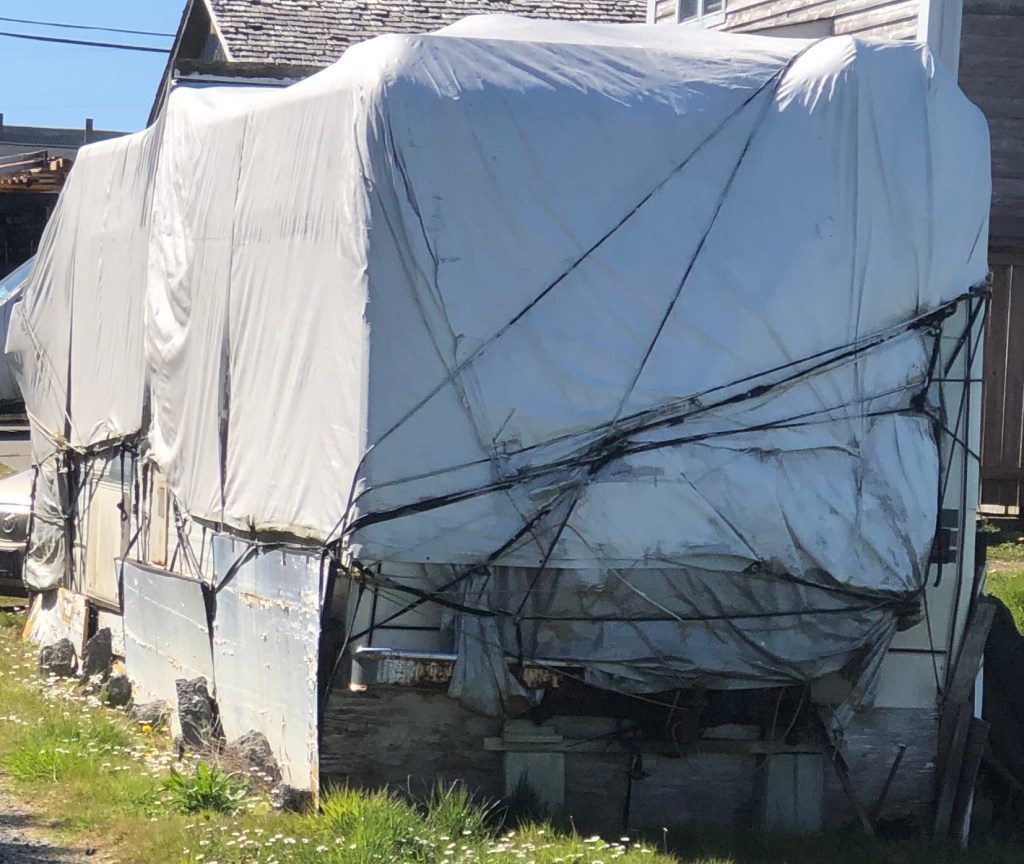
But first, before moving here, I didn’t realize that old motor homes and RVs provide a key source of permanent housing in rural areas. Even in our rainy, mossy, cold and humid climate. For some, it’s the only affordable option. On some properties, I see a number of them, in what appears to be a lineup from newer and habitable to increasingly older ones that are covered in tarps to extend their life before they are eventually abandoned and left in place. It seems if folks have access to property, the expired motor homes stay off the public right-of-way. It’s not a great solution, of course, because they can leak hazardous waste into the soil and attract other problems. You see some with multiple layers of tarps and ropes and wonder how stale the air must get inside.
To find out what can be done about the Moclips monstrosity, I called Brent Schiller, the Washington Department of Transportation’s Maintenance Supervisor for Grays Harbor County and got the scoop.
And I learned that it’s a big problem in the area and, as with a lot of things, it’s complicated.
First of all, it’s not just a matter of driving it away or hooking it up and pulling it down the highway to the dump. Most are inoperable. The large ones require a huge tow truck that can accommodate it on the bed. Many tow companies refuse to take them. Brent finds that salvage companies won’t even return his phone calls to ask them to handle them.
A few years ago, a fee was added to licensing a motor home to help cover the costs of proper disposal at the end of their lives, but those fees aren’t really enough to cover the costs of towing from distant places and the process for getting reimbursed is lengthy and cumbersome.
If Brent’s department has to arrange to tow it and he can find an operator that will do it, that cost comes straight out of his budget that is responsible for maintaining 674 lane miles of state highway in the county. Brent says it can take between $6,000 and $10,000 to dispose of one abandoned motor home and that’s money that would otherwise be spent fixing potholes and on other important road work. None of the fees collected with RV licenses would reimburse his department.
Bear in mind, many of the abandoned RVs are filled with all manner of things, included hazardous waste. Like we’re talking feces, people. Until you’ve seen inside one, you might not even be able to imagine the squalor that sometimes happens. It has to be dealt with before any kind of salvage can even begin.
But here’s something more disturbing. A big reason Moclips is facing its current situation is due to Washington law. Get this: in Washington, when someone leaves personal property on land they have been renting, and then stop paying rent, or no longer have permission to keep the property on the land, the land owner has limited options, but one wide open loophole.
Let’s walk through an example. Say someone was renting a space on land for their motor home. Let’s say they stopped paying rent or the landowner wanted the land vacated. The landowner gives written notice to the motorhome owner. The motorhome owner has three days to respond. If there is no response or solution agreed upon, state law says that “the property shall be deposited upon the nearest public property and may not be stored by the landlord.” So if a landowner wants an old trashed out motorhome removed from their property AND the person who owns the motorhome does not respond, the law directs that trashy old RV be deposited on the nearest public property. Like the side of a road. Yes, that is the truth. And it appears that’s exactly what happened in Moclips. Nobody broke the law doing what they did. You can’t dump them on private property, but you can on public property.
It’s not a big deal if somebody leaves behind a box of socks, but a motorhome is a different thing altogether.
“It’s not fair,” Brent says, “because it just dumps the problem on the taxpayer and the community where it’s parked.” If more people knew about the law, imagine how bad this could get. So don’t tell anybody, okay!? Whose idea was this anyway???
So the real solution will require changing the law. And maybe directing some of the RV disposal fees to recover the costs of removal from public property.
Here are the names and contact numbers for District 24’s representatives in the Washington legislature:
—Representative Steve Tharinger, phone number 564-888-2366
Email: https://app.leg.wa.gov/pbc/memberEmail/24/2
—Representative Mike Chapman, phone number 564-888-2321
Email: https://app.leg.wa.gov/pbc/memberEmail/24/1
—Senator Ken Van De Wege, phone number 360-786-7646
Email: https://app.leg.wa.gov/pbc/memberEmail/24/0
The legislature is in session right now. Just sayin.
 North Beach Ways